

CDPI Team
A record R$ 85.2 billion in rural credit for family farmers, and a pilot showing how digital public infrastructure can transform the way it reaches them.
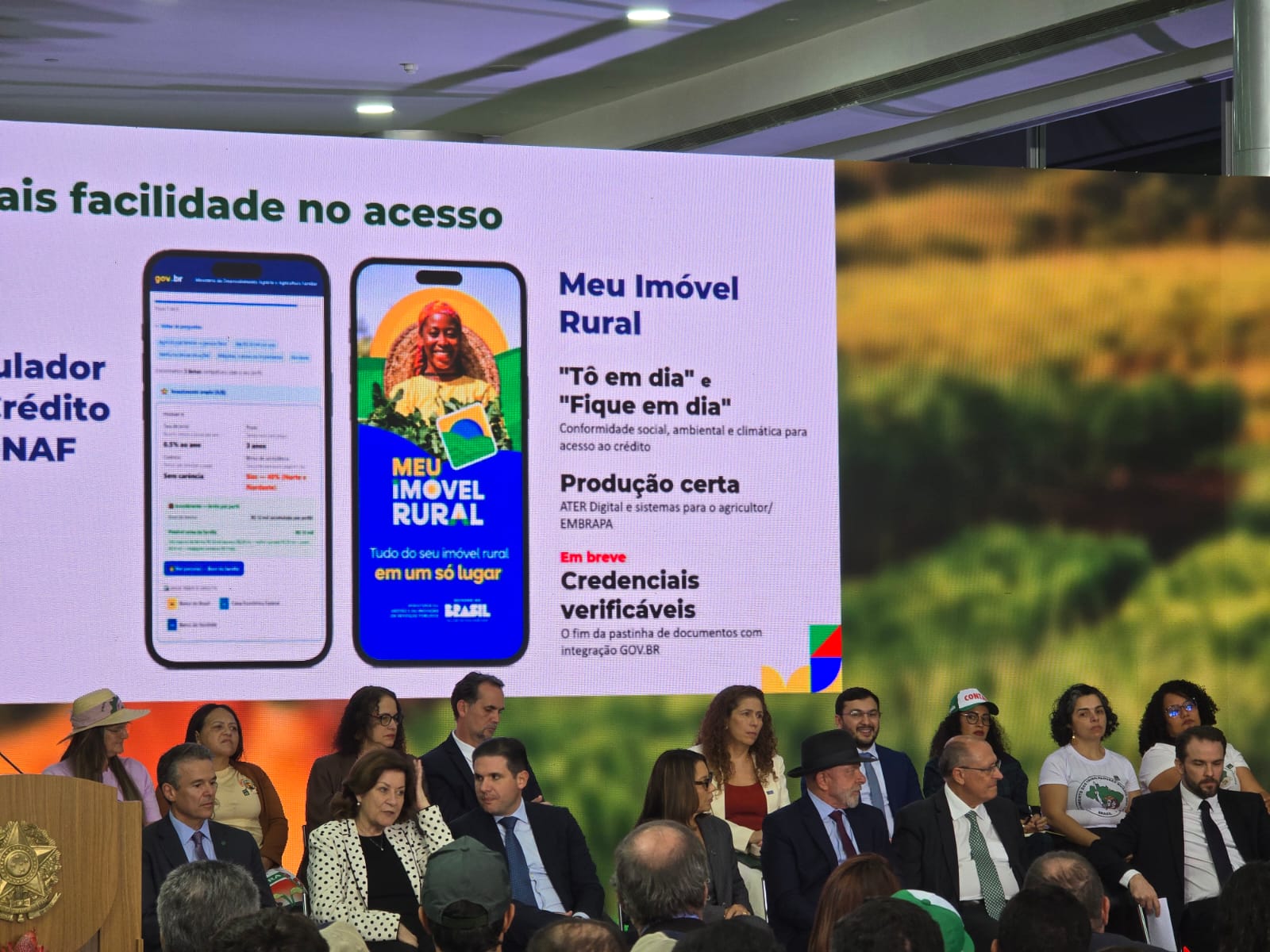
On 30 June 2026, President Lula launched the Plano Safra da Agricultura Familiar 2026/2027, Brazil’s flagship agricultural policy, at a ceremony that also showcased the country’s digital tools for rural services. It’s one thing to believe in DPI. It’s another for a country to make it part of how it serves its people.
The Plano Safra brings a record R$ 85.2 billion in rural credit for family farmers. Presented alongside it was Meu Imóvel Rural (MIR), the platform developed by the Ministry of Management and Innovation in Public Services (MGI) and DATAPREV, with verifiable credentials integrated in collaboration with the Centre for Open Societal Systems (COSS) and our team.
What changes for a farmer? Accessing subsidised rural credit could mean presenting at least 20 documents. In the pilot in Rio Grande do Sul, those documents can now live as verifiable credentials on the farmer’s own phone, shared only when they choose and verified instantly by Banco do Brasil. A live rural credit transaction using verifiable credentials has already gone through, and Phase 2 is expanding to more states and new use cases.
Congratulations to Brazil and its institutions, MGI, DATAPREV, and Banco do Brasil, and to the partners who worked alongside them: COSS, EY, Co-Develop, Inji, and EkStep.